

LinaHistory & heritageArchives · culture · people · places

Understand the facts.
Build your perspective.
Be part of the future.
Short, clear modules on shared history, diplomacy, peace agreements, post-treaty implementation, the Abraham Accords and civic dialogue—built for curious learners.

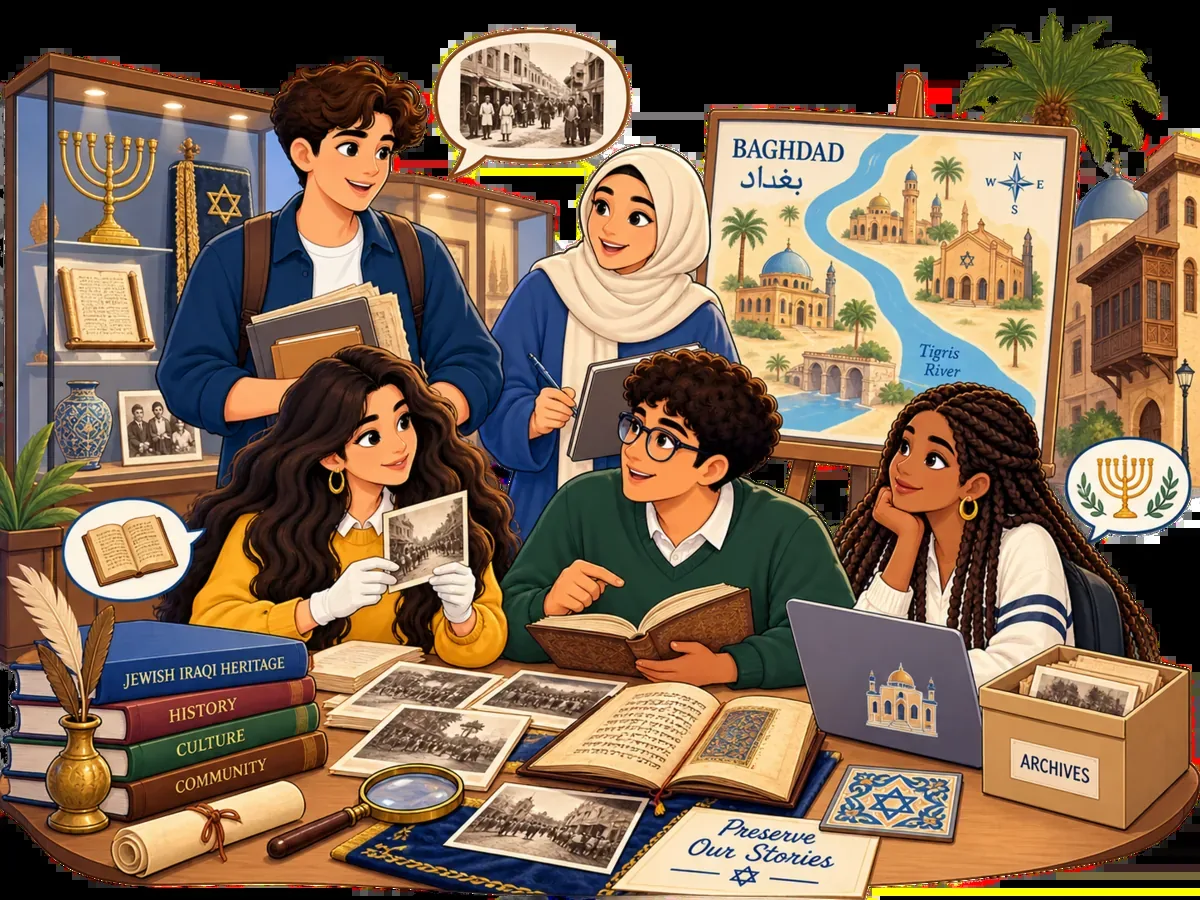
Explore the Movement’s Iraq work through faith, shared Abrahamic heritage, civic dialogue, the Abraham Accords connection and The Virtual Embassy of Iraq in Israel’s international room.


Why Iraqi Jewish heritage matters to understanding the region.
Learn more →
Official relations, normalization, Track II and civic diplomacy.
Learn more →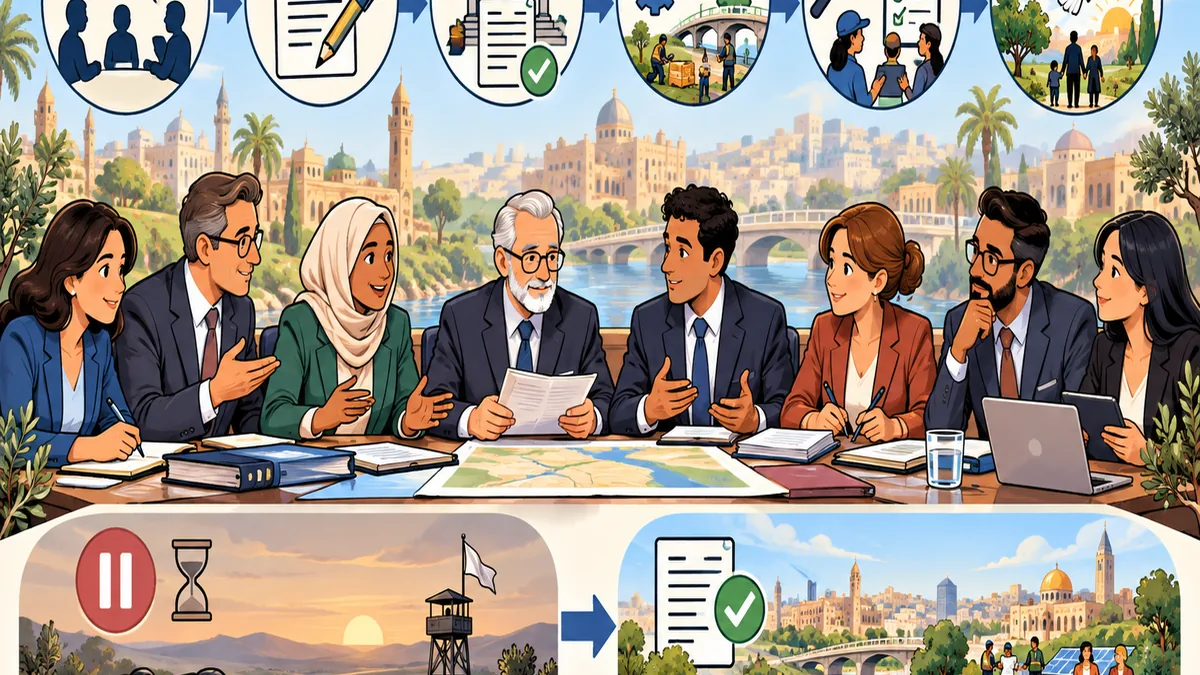
Ceasefires, treaties, legal approval, implementation and monitoring—without treating them as the same thing.
Learn more →
How the agreements began, expanded and changed regional diplomacy.
Learn more →
Explore the civic and interfaith movement, including its Iraq chapter and people-to-people approach.
Learn more →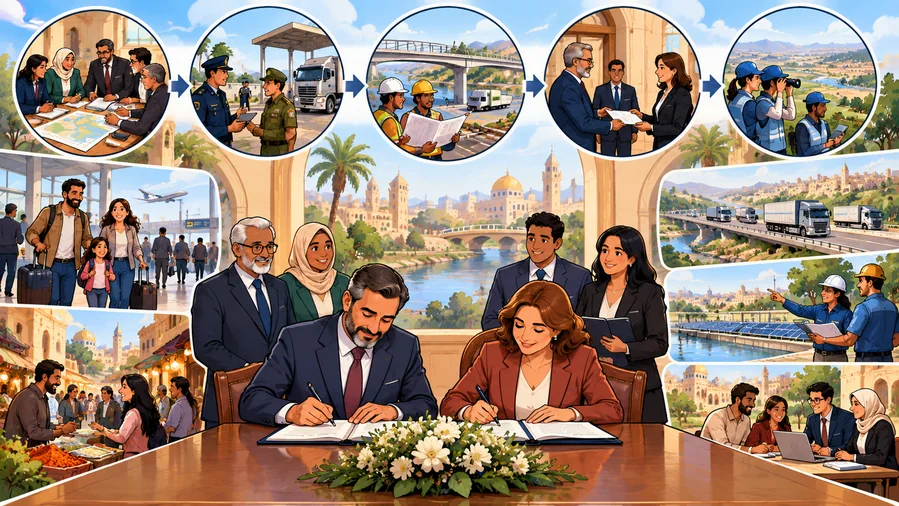
How entry into force, domestic steps, implementation bodies, monitoring and review turn a signed text into practice.
Learn more →Four recurring guides help connect history, diplomacy, regional affairs and civic dialogue.




Israel, the United Arab Emirates and Bahrain signed the first Abraham Accords agreements in September 2020. Morocco followed in December 2020 and Sudan signed the declaration in January 2021.
Iraq’s Official Gazette published Law No. 1 of 2022, which prohibits and criminalizes normalization and the establishment of relations with Israel. This legal context is essential when discussing Iraqi official policy.
Kazakhstan joined the framework in a different way from the original normalization cases: it had already maintained diplomatic relations with Israel since 1992.

Official diplomacy, domestic law, historical heritage, public opinion and independent civic dialogue are separate layers. Understanding the region means not collapsing them into one category.
Three quick ways to turn reading into practice.
Tap the years from earliest to latest.
Track II diplomacy is the same as official government negotiation.
See the same idea explained at different depths.
What is normalization?Iraq and Israel do not have formal diplomatic relations, but the human history connecting the societies is much older and more complex than modern state-to-state politics.

Jewish communities in Mesopotamia developed religious, intellectual and communal traditions over many centuries, making the region one of the historic centers of Jewish life.
In modern Iraq, Jewish communities were especially visible in Baghdad and also lived in Basra, Mosul and other cities, participating in commerce, education, music and the professions.
The Iraqi Jewish Archive, discovered in Baghdad in 2003, preserves thousands of books and tens of thousands of documents illuminating schools, families, institutions and daily life.
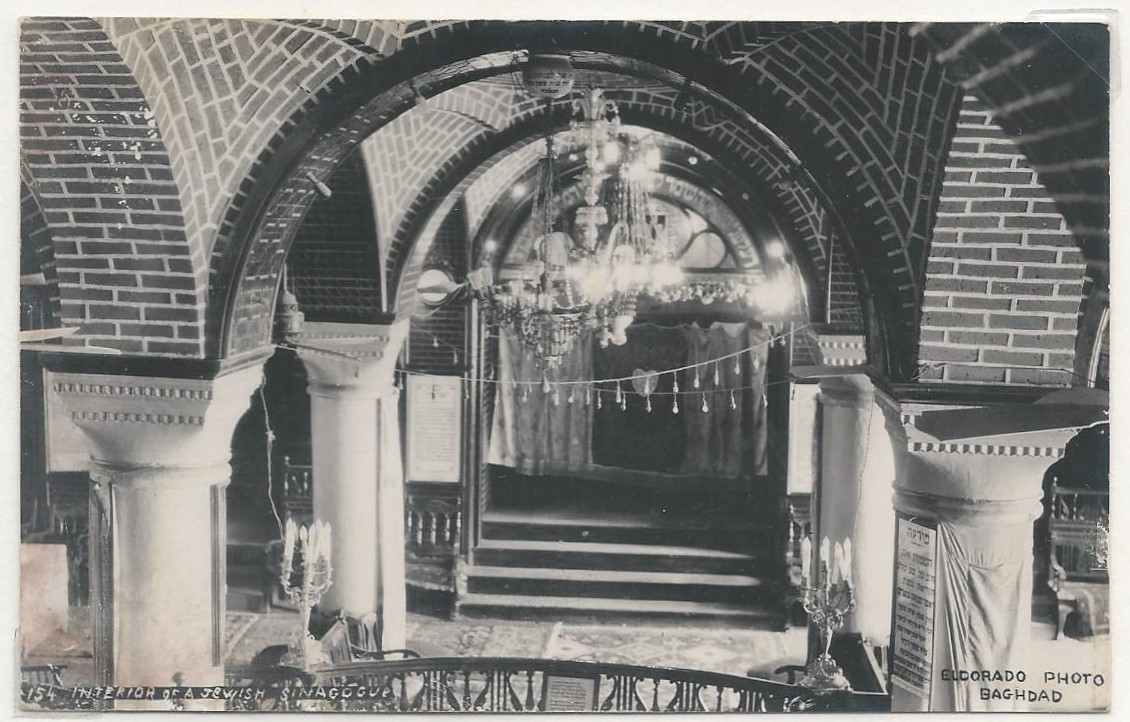
Jewish communities lived in Mesopotamia for more than two millennia. In the modern era, Iraqi Jews were active in commerce, public life, education, music and the professions. The U.S. National Archives estimates that about 130,000 Jews lived in Iraq by 1949, primarily in Baghdad, Basra and Mosul.
Historic interior of the Great Synagogue of Baghdad. Public-domain image; source: Wikimedia Commons / Babylonian Jewry Heritage Center.Select a lens to see how heritage, conflict, law and diplomacy overlap without becoming the same story.
After the Babylonian exile, Jewish religious and intellectual life developed deeply in Mesopotamia. The region later became a major center of Jewish scholarship.
Jewish Iraqis participated in urban economic, cultural and professional life. Archival records preserve schools, hospitals, communal institutions and family histories.
Iraq participated in the 1948 Arab–Israeli war. Iraq and Israel did not establish diplomatic relations after Israel’s creation.
Most of Iraq’s Jewish population left the country during the early 1950s, many settling in Israel. The migration reshaped both Iraqi society and communities in Israel.
More than 2,700 books and tens of thousands of documents were found in Baghdad and later conserved and digitized by the U.S. National Archives and partners.
Israel, the United Arab Emirates and Bahrain signed the first Abraham Accords agreements in September 2020. Morocco followed in December 2020 and Sudan signed the declaration in January 2021.
Iraq’s Official Gazette published Law No. 1 of 2022, which prohibits and criminalizes normalization and the establishment of relations with Israel. This legal context is essential when discussing Iraqi official policy.
Kazakhstan joined the framework in a different way from the original normalization cases: it had already maintained diplomatic relations with Israel since 1992.
Official diplomacy, domestic law, historical heritage, public opinion and independent civic dialogue are separate layers. Understanding the region means not collapsing them into one category.
Many arguments become confusing because different kinds of relationships are treated as synonyms. Open each concept and test the distinction.

Not every relationship follows every step, but this sequence helps explain how contact can grow into formal cooperation.
Communicates a government’s official positions and represents the state abroad.
Builds working relationships with institutions, communities, business, academia and culture.
Many missions assist citizens and travelers, depending on their mandate and local arrangements.
Diplomats observe political, economic and social developments and report to their governments.
Peace processes use several different instruments. A ceasefire, an armistice, a peace treaty, normalization and long-term peacebuilding can be connected—but they do not mean the same thing, and there is no single sequence that every conflict follows.
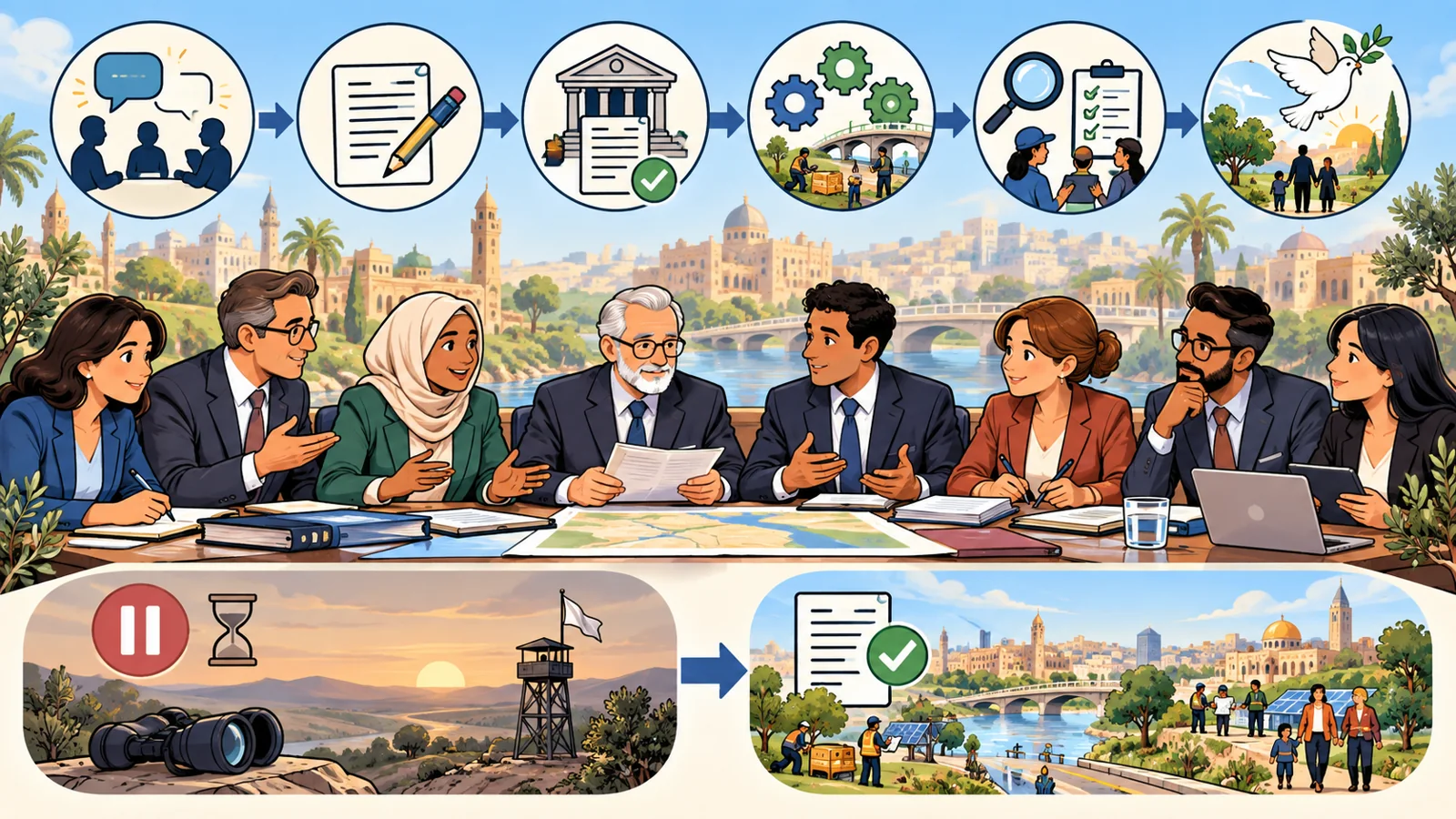
A signed document is one milestone, not the whole process. Parties may first reduce violence, negotiate substantive issues, write commitments, obtain any required legal approval, bring the agreement into force, implement it and create ways to monitor compliance or resolve disputes. Some stages overlap, repeat or never occur.
Real negotiations are rarely linear. This sequence is a learning model for reading the process.
Direct talks, intermediaries or mediators open a channel and test whether negotiation is possible.
The parties identify issues, procedures and practical steps that may make talks workable.
They bargain over the issues in dispute and over the obligations each side would accept.
Negotiators and lawyers convert political understandings into defined commitments, timelines and procedures.
Authorized representatives sign. Whether signature itself creates binding consent depends on the agreement and the applicable legal process.
Some treaties require ratification, acceptance or approval before they become legally operative; others may take effect by signature under their terms.
Institutions carry out what was agreed: schedules, security arrangements, legal changes, exchanges, cooperation or other obligations.
Verification, dispute procedures, communication and longer-term institution-building can help manage compliance and future disagreements.
The label matters less than the actual text, parties, obligations and legal effect.
An agreement or arrangement to stop or reduce fighting under stated terms. It may be temporary, local or broader, and it can create space for political talks without settling the underlying conflict.
Look for: duration · geographic scope · prohibited acts · monitoringA military agreement suspending active hostilities. Under the law of armed conflict, an armistice does not by itself necessarily end the legal state of war.
Look for: military lines · suspension terms · notice · violationsA broader settlement can address the relationship between the parties and the issues needed to end or transform a conflict. When the instrument is a treaty between states, its legal effect depends on its terms and the law of treaties.
Look for: parties · obligations · entry into force · dispute proceduresThe establishment or expansion of ordinary official relations between states. It may accompany a peace treaty, follow one, or occur through a different diplomatic instrument.
Look for: recognition · diplomatic missions · travel · trade · sector agreements

Open each card before treating a headline as evidence of a completed peace process.
Identify exactly who signed and who is covered by the commitments.
Separate broad principles from specific obligations, deadlines and geographic scope.
Check the start time, entry-into-force clause, duration and any review dates.
Look for monitoring, verification, reporting and access arrangements.
Find consultation, mediation, arbitration, joint committees or other procedures.
Implementation plans, domestic measures and follow-up institutions often determine what the document changes in practice.
A ceasefire, armistice, peace treaty and normalization are different instruments.
Signing, legal entry into force and practical implementation are separate questions.
Next: apply these distinctions to the Abraham Accords and other diplomatic agreements.
The Abraham Accords are best learned as a sequence of real diplomatic steps: breakthrough announcements, signed agreements, restored official relations, new cooperation—and later accession by a country that already had relations with Israel.
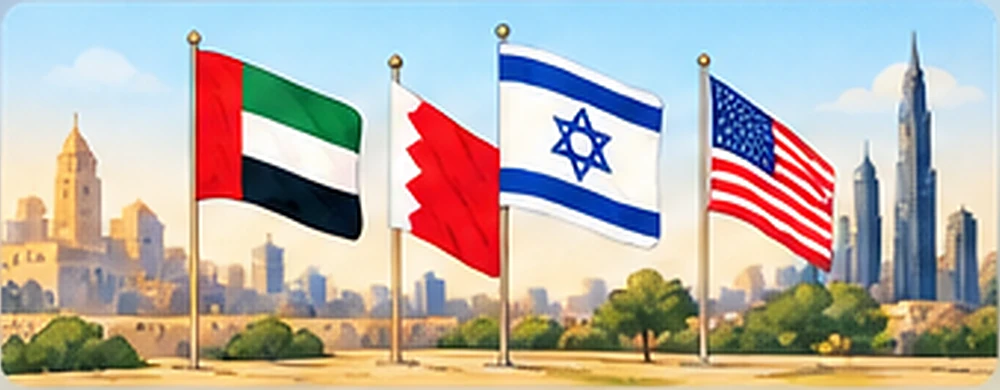
The framework grew through different legal and diplomatic routes rather than one identical document.
2020 treaty establishing peace, diplomatic relations and full normalization.
2020 declaration establishing peace and diplomatic relations.
2020 joint declaration restoring and expanding official relations.
Signed the Abraham Accords Declaration in 2021; later instability complicated full implementation.
Announced accession in 2025 after decades of existing diplomatic relations with Israel.
On 13 August 2020, Israel and the United Arab Emirates announced a move toward full normalization. Bahrain announced its own normalization track on 11 September.
Opening agreementsAt the White House, Israel and the UAE signed a treaty of peace, diplomatic relations and full normalization. Israel and Bahrain signed a declaration of peace and diplomatic relations, alongside the Abraham Accords Declaration.
Washington signingMorocco, Israel and the United States signed a joint declaration in Rabat on 22 December 2020. Sudan signed the Abraham Accords Declaration in January 2021, although later instability and war complicated full bilateral implementation.
Different legal pathsKazakhstan announced accession to the Abraham Accords in November 2025. This was different from the original normalization cases because Kazakhstan and Israel had already maintained diplomatic relations since 1992.
Later accessionFormal state-to-state relations can support embassies, official visits, direct communication and agreements between ministries.
Depending on the bilateral relationship, normalization can open direct flights, tourism, business, investment and commercial ties.
Participants have pursued cooperation in areas such as technology, health, water, energy, finance, research and security policy.
The Abrahamic Movement in Iraq is a featured civic and interfaith initiative of The Virtual Embassy of Iraq in Israel, not a treaty or government program. Through the Embassy platform, we carry Iraq-rooted civic dialogue into the international room through Track II diplomacy, multilingual public diplomacy, heritage, international partnerships and people-to-people outreach.
A simple way to understand how people-to-people initiatives can develop.
Seminars, learning programs and exchanges can create spaces for participants to encounter new ideas and one another.
Shared stories, archives, music, places and memory can become starting points for conversation.
Civil-society relationships can connect educators, professionals, religious figures and community organizers across boundaries.
The movement uses Abraham/Ibrahim as a shared point of reference across Judaism, Christianity and Islam, with the aim of creating space for cooperation without asking communities to erase their differences.
Source: The Abrahamic Movement’s own public materialsWhat the movement says it is trying to build in Iraq.
The chapter describes work with Sunni, Shiite and Sufi communities and frames interfaith engagement as part of Iraq’s own religious and social history.
Its stated approach includes educational activity for professionals and students, with an emphasis on moderation and resisting sectarian extremism.
The movement presents civil society as a place where relationships can be built before—or even when—formal state diplomacy is absent.
Open the full Abrahamic Movement in Iraq interactive guide →
What happens next depends on the treaty itself and the parties’ legal procedures. Some treaties can become binding through signature; others require ratification, approval, acceptance, an exchange of notifications or another agreed step before entry into force.
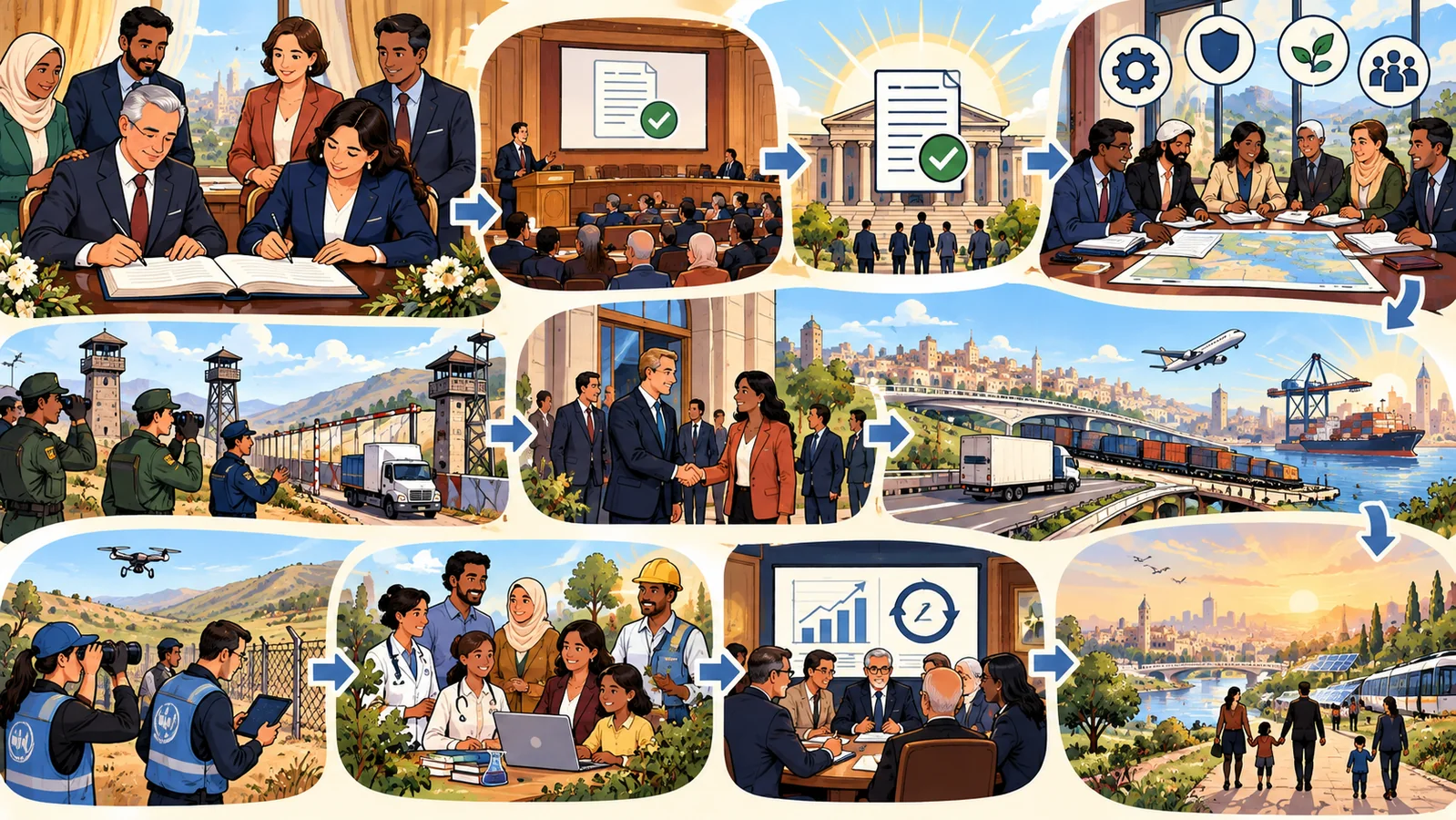
After signature, negotiators and governments usually shift from making promises to managing legal effect and performance. The treaty may set conditions for entry into force. Once binding, implementation can require domestic legal or administrative action, joint bodies, budgets, security arrangements, diplomatic channels, technical work, monitoring and dispute-resolution procedures. A signed document can therefore be only the beginning of a much longer implementation phase.
The exact sequence varies. Read the treaty first: it tells you which steps apply and when.
Does signature itself express consent to be bound, or is ratification, approval, acceptance or another step required?
The treaty’s final clauses normally specify when it becomes legally operative for the parties.
States may need legislation, regulations, budgets, executive decisions or administrative instructions to carry out commitments.
Joint commissions, liaison offices, secretariats, technical groups and named contact points can turn broad commitments into scheduled work.
Depending on the treaty: security arrangements, border procedures, diplomatic representation, transport, trade, water, infrastructure or other agreed measures.
The parties—or agreed third parties—may collect data, inspect, observe and publish reports on whether commitments are being performed.
Treaties may provide consultation, joint committees, mediation, arbitration, courts or other procedures for disagreements about interpretation or performance.
Periodic reviews can identify delays, update timetables, adopt protocols or adjust implementation while keeping the underlying commitments clear.
A headline can describe one milestone while readers assume another. Keep these separate.
Authorized representatives signed the text.
This does not by itself tell you whether the treaty is already in force.The treaty’s agreed legal conditions for entry into force have been satisfied.
A treaty in force is binding on its parties and must be performed in good faith.The parties are actually carrying out the obligations.
Implementation may be partial, phased, delayed or ongoing.Performance is being checked through reports, observers, data or agreed verification mechanisms.
Monitoring describes how compliance is assessed; it is not a substitute for implementation.Read each situation and identify what has actually happened—not what you hope happens next.
A treaty can create work across several systems at once.
Ratification, legislation, regulations and legal authority.
Commissions, ministries, budgets, staffing and timelines.
Ceasefire lines, force arrangements, borders, verification or other agreed measures.
Direct channels, representation, working groups and formal consultations.
Travel, transport, commerce, infrastructure, services or other practical commitments.
Reports, review meetings, data, inspections and dispute procedures.
Do not infer legal effect from the signing date alone.
Look for deadlines, phases and conditions.
Identify the ministry, commission, security body or other actor named in the text.
Look for enacted measures, opened institutions, verified actions or published reports.
Find the consultation, review or dispute-settlement clause.
Eight questions. Your score stays in your browser; nothing is submitted.

Use precise language. Search a term or browse all definitions.
An agreement or arrangement to stop or reduce hostilities under specified terms. Ceasefires vary in duration, geographic scope, purpose and monitoring arrangements.
A military agreement suspending active hostilities between belligerents. It does not by itself necessarily end the legal state of war.
A treaty intended to establish a formal legal settlement between states after conflict. Its obligations and legal effect depend on the text and applicable treaty law.
A formal act by which a state expresses consent to be bound by a treaty when ratification is required by the treaty or the negotiating states’ agreement.
The point at which a treaty becomes legally operative according to the conditions set out in the treaty or otherwise agreed by the parties.
Arrangements for observing, checking and reporting whether parties are carrying out agreed commitments, especially common in ceasefire and security arrangements.
A set/framework of normalization agreements and declarations beginning in 2020 between Israel and participating Arab states.
Interfaith or intercultural engagement among communities associated with Abrahamic religious traditions.
Non-governmental, people-to-people activity intended to improve communication and understanding across borders.
Formal relations between states, often including mutual recognition, embassies or accredited diplomatic representation.
The establishment or expansion of ordinary official relations between states after non-recognition, rupture or hostility.
Long-term efforts to reduce conflict drivers and strengthen relationships, institutions and conditions for sustainable peace.
Official diplomacy conducted by governments and authorized representatives.
Unofficial dialogue involving civil society, experts, academics, former officials or other non-governmental participants.
The religious, cultural, social, archival and historical legacy of Jewish communities that lived in Iraq for many centuries.
Original evidence such as a law, treaty, archival document, official record, speech, photograph or contemporaneous record.
Analysis or reporting that interprets, contextualizes or synthesizes primary evidence.
An independent non-governmental effort organized by individuals or civil society rather than a state authority.
The legal, administrative, institutional and practical measures through which parties carry out the obligations of a treaty.
A body established by an agreement to coordinate, supervise, review or help resolve issues arising during implementation.
Application of a treaty, or part of it, before formal entry into force when the treaty or negotiating states so provide.
The registration of a treaty or international agreement with the United Nations Secretariat under Article 102 of the UN Charter after it has entered into force.
This learning page is designed to send you outward to evidence. Open the documents, inspect context and compare interpretations.
Move from concepts to original records and long-form analysis.